
My elder son turned 30 this year, so it’s a while since I last experienced first hand the teenage mind says John Hunston the walking mountain leader.
I spent four out of five weekends in March helping to train Duke of Edinburgh Bronze Award year 9 (13-14 year olds) students for their expeditions. Some of this was indoor, talking about what to wear, eat and carry, but mostly it was practical, walking, navigating and camping in a variety of terrain.
The kids were mostly great. Occasionally, they would say something like “why do we have to go that way?”, or “I thought I was literally going to die on that mountain” (after a short ascent), but on the whole they were funny, good spirited and questioning.
They suffered somewhat from lack of concentration, especially when navigating. I’d ask them to count steps, then hear them talking. The funniest thing was that they’d then make up a number of steps at the end of the section – it’s simply not possible to count and talk. Taking bearings was a difficult concept to get across, but they got there in the end. Putting up a tent and using a Trangia stove appeared entirely new to them, as was cleaning it afterwards with burnt pasta in the bottom. “Can’t I just pay for it?” No, you can’t, it has to be cleaned.
The last training session ended in blood, sweat and tears. One girl cut herself trying to remove burnt pasta with a knife, there was plenty of sweating up hills and another girl ended the weekend in tears, vowing never to go walking again. It had been their first day carrying full loads, and it came as something of a shock to them.
A number of students had gone round in circles for much of the day and had to be rescued miles from the finish. Some groups had split in two or even three, attaching themselves to other groups. The whole thing had been a shambles, so it was with some trepidation that I turned up for the assessed expedition.

The transformation was amazing! They arrived at the start in very positive mood; even the cryer was all smiles. They checked the direction of travel using map and compass. The weather was bright and clear, if a little chilly. After correcting a few groups at the first bend, all went well.
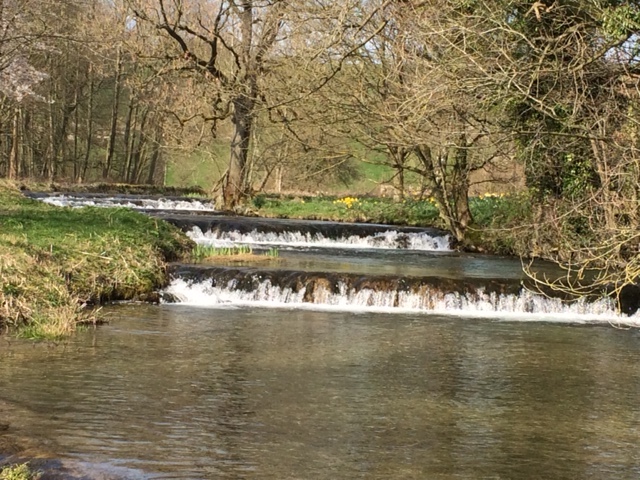
The previous weekend had been in the Rivington area, which was not so easy to navigate and not so pretty as the White Peak in Derbyshire, where we were now. The sun sparkled on streams, the limestone gleamed, the paths were clear and bog-free. Quaint villages and ancient bridges punctuated the route, which handily crossed several roads to make keeping tabs on the students much easier. One or two groups were a little slower, but at the end of day one all was well. My own group’s food was excellent, with Bolognese followed by dumplings, both home made, and I couldn’t resist one of the latter when offered.
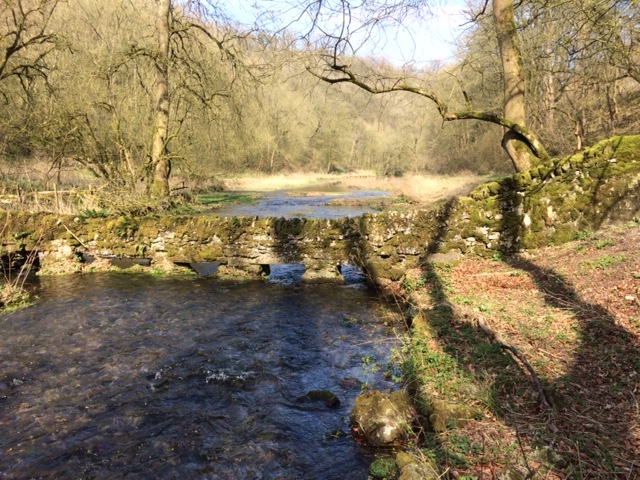
The following day they set off pretty much on time, and again the scenery was beautiful. Day one had started in Bakewell and followed the river Bradford past Youlgreave, ending just above Lathkill Dale near Over Haddon.
The second day headed north to Monsal and Miller’s Dales, finishing near Tideswell. I can’t think of a more beautiful part of the country for an outing of this kind. Nowhere was it terribly strenuous, and yet there are some spectacular as well as pastoral views. The instructors monitored the groups and kept in touch via WhatsApp. All groups finished before the deadline for the buses’ departure.
Back on home turf, I’ve enjoyed a day around Grasmere, following the Coffin Road to Rydal Mount, then up over Nab Scar, Heron Pike and Great Rigg before dropping back over Stone Arthur.

My partner had been on a navigation course herself recently (I know, I know, but she wouldn’t learn as well from me) so we practised ticking off features as we passed them, her main difficulty being seeing them on the map – mine too! I was interested to see close up how the Stone Arthur path had been restored after being washed away in parts by Storm Desmond three years ago. It was a lovely day and Larry had a great time, especially once he’d found a sheep bone to run round with and gnaw.

Another memorable outing included an ascent of Rowling End and Causey Pike, especially as Larry found me a new hat! It has probably been there since last November, as it must have been worn by someone setting off fireworks on Bonfire Night for viewing from the Swinside Inn, given the logo it bears.
We swung left rather than right at the pass before Sail, heading towards Buttermere initially, then turning left to pick up the Rigg Beck track. This is a little rough but perfectly good, if you keep to the lower, right hand variants. It was wonderfully quiet, and I doubt this secluded trail between Newlands and Buttermere, west of Knott Rigg and Ard Crags, sees many travellers.
Another outing was thanks to Mark Richards, the guidebook writer, who recently posted picture of a Bronze age settlement on the side of Clough Head on Facebook. I decided to take a look, so Larry and I headed over Clough Head, then dropped down onto the site to get the view from above. It’s just above the quarry at the museum south of Threlkeld, and covers quite a large area.
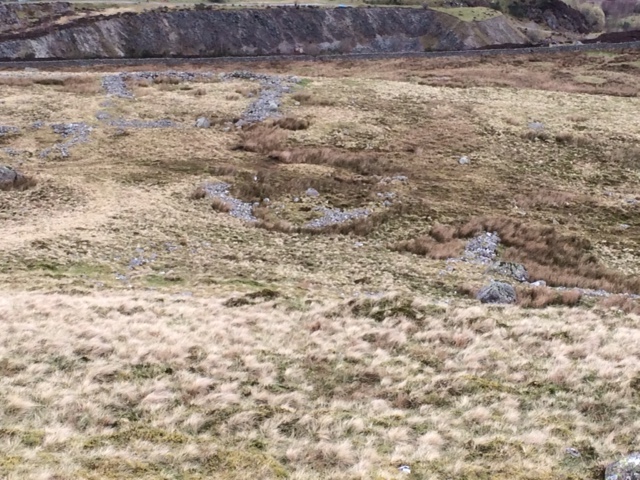
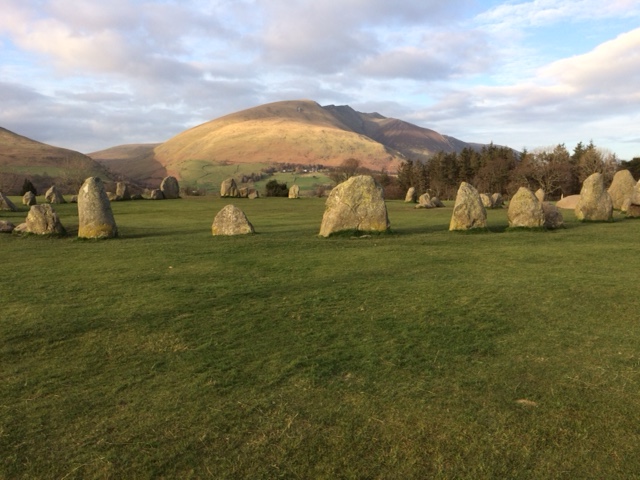
The “houses” can be clearly made out from the ruins of their walls, and a boulder marks the site of their water source. Mark thinks it ranks alongside Casterigg stone circle in terms of importance, yet hardly anyone sees or comments on it. Along with hundreds of other competitors, I unwittingly ran straight past it recently on the Clough Head fell race! Next time you’re in the area, take a look; the approach is from the end of the Coach Road, not the museum.
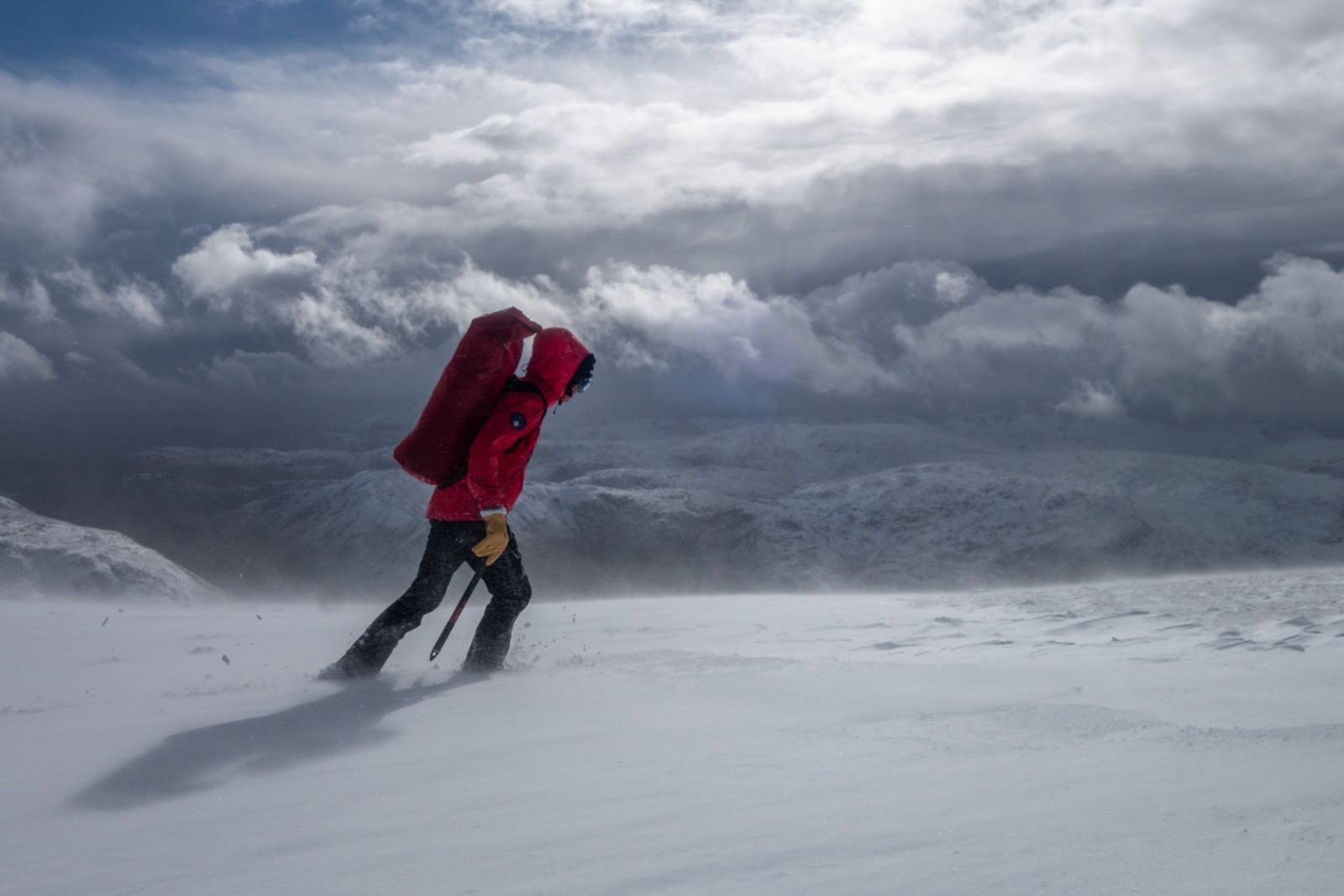
Finally, the mountain rescue team in Keswick has been relatively quiet, with only 17 rescues to date this year. A memorable one was on Helvellyn, though, in the worst of the winter weather, with a howling 60 mph wind sandblasting the face.
Goggles were worn! Fortunately, the rescuee only needed walking off, having managed Striding Edge in testing conditions, but unable to find his way back down. It gave us a good blast, anyway, and Patterdale might have got the job had they not been tied up with bus passengers stranded in the snow on Kirkstone Pass.
John Hunston – the walking mountain leader
http://johnhunstonwalking.com
John is a member of the Keswick Mountain Rescue – you can donate to this amazing, lifesaving charity online via this link: http://keswickmrt.org.uk/donate/