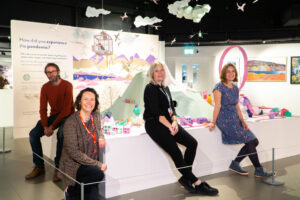
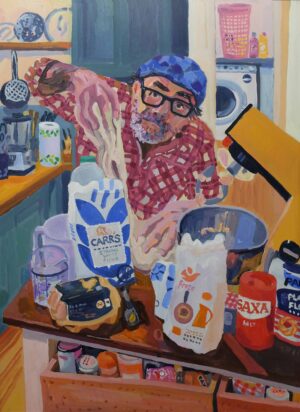
Textiles are an important part of our history, recording what has happened centuries ago, and giving people an artistic platform to continue to express their thoughts and ideas – as you can discover in Cumbria this month.
Kendal is famous for the Quaker’s Tapestry and there are excellent historic needlework collections in the great houses of Cumbria for example,Muncaster Castle.
And now there are two new textile exhibitions in the county. From a royal 17th century bedspread to contemporary ‘craftiest’ (craft used as a none aggressive form of activism) there’s something for everyone’s taste and interest.
And to discover more about artists working in textiles today, THREAD Contemporary Textile exhibition at the gallery in Rheged is a must to visit.
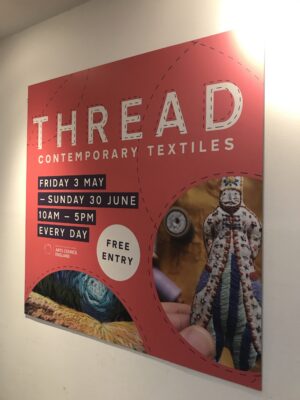
This is an inspiring exhibition of artists using all forms of textiles, including work by the Craftivist Collaborative.
Sarah Corbett of Craftivist Collaborative explained how pieces of textile which had been carefully created with time, patience and thought had helped to change laws in Spain, earn fair living wages from a large corporation and made politicians stop an think about the environment.
There’s an opportunity to make your own piece of Craftivist art in the ‘Blue room’ at the end of the exhibition. As Sarah says when you take time to make something, people take notice.
The range and styles used by the artists featured
From a hobby, after buying a kit in a craft shop he has developed an international career promoting needlecraft as an art form and publishes his own needlework magazine..

The bobbin and thread exhibit which captures identity on the yarn is fascinating. However, for me, my favourite piece is called Thrall, with links of embroidery that capture the thoughts and feelings creating a piece mean to the artist, Sarah Impey.

There are some very colourful textile portraits, including one of Boris Johnston in the exhibition, and ghostly life-sized figures free-stitched onto fine panels which are suspended from the ceiling.
This is like no other textile exhibition I’ve seen, and I loved it.

So I’ve seen the present and possibly the future of textile art, now I want to see more of the history of this art form – which is why I am now looking forward to visiting Sizergh Castle near Kendal this summer.
For the first time in its history, the 17th-century Goan bedspread of King James II has gone on public display at the National Trust’s Sizergh Castle.
The Indian bedspread is made from satin, with gold thread stitched into an intricate design of mythical creatures, and was gifted to the Strickland family of Sizergh in the 1600s, as a thank you for their loyalty. Sir Thomas and Winifred Strickland were considered close friends of the King and Queen having accompanied them in 1688 to France in exile. Sizergh’s collection includes many of the gifts which the family received in gratitude, including a lock of the King’s hair and the Queen’s collection of Imari porcelain.

The exhibition space allows visitors to learn more about how the delicate fabric at Sizergh is cared for and a specialist textile conservator will be working on the bedspread over the coming months.
The castle will also be shining a light on another of its fabric items in the collection – a complete set of five 17th-century Antony and Cleopatra Flemish tapestries. Later this year, the first tapestry in the set, ‘The Meeting of Antony and Cleopatra’, will travel to Belgium for urgent specialist treatment to restore its colour and condition. The five wall hangings depict Plutarch’s (and subsequently Shakespeare’s) famous stories and are the largest surviving weaving of this series in the world. The treatment for this one tapestry will cost £77,000 in total so the castle will be raising funds through raffle tickets and donations throughout the year.
- Sizergh Castleis open Tuesday-Sunday, 12-4pm, until 27 October and is free to enter for National Trust members. The gardens, shop and café are open 7 days a week.
- THREAD Contemporary Textiles is open everyday, 10am-5pm until 30 June and entry is free at Rheged, Penrith.
We’d love to know what you think of these exhibitions – and what other interesting textlie work you’ve seen in Cumbria and would like to share with our followers. Please leave your comments in the box below or on any of our social media platforms.
by Karen Morley-Chesworth