

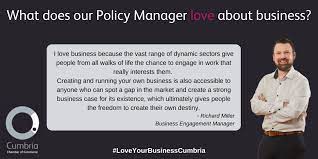
It would be fair to say that over the last two years, UK business has seen the most prolonged period of turmoil since the 2008 financial crisis, says Cumbria Chamber of Commerce Business Engagement & Policy Manager, Richard Miller.
Organisations of all sizes, across every sector are highly unlikely to have escaped some form of profound effects that the pandemic brought to their door.
It is difficult to say exactly how many businesses permanently stopped trading during the pandemic, or how many new businesses opened. This is because there is no single measure of business closures and openings, that covers all types of businesses. There would also have been other businesses that ceased trading for other reasons not related to the pandemic, and hence why it is difficult to accurately estimate the exact scale of the damage, particularly within the SME community.However, despite unprecedented government support, it is estimated that potentially hundreds of thousands of businesses either temporarily chose to stop trading, or were forced to close for good due to lack of viable custom and an inability to bear the duration and burden of the Covid-19 restrictions.
The implications of the pandemic for Cumbrian businesses have been particularly severe, which largely speaks to the fact that a high number of SME’s in the region are tourism focussed within the Lake District National Park, and were unable to operate for long periods of time with no other means to generate revenue, and the large organisations which rely heavily on high staffing numbers, such as manufacturing, construction and clean energy also found it difficult to generate the required level of orders to maintain their workforce in full.

Is there light at the end of the tunnel?
While many business owners will, with a heavy heart, have had to say goodbye to their livelihoods that they fought so hard to create, it is not all doom and gloom for UK business and those thinking of becoming their own boss. It is actually thought that the number of new businesses opened over the last few years reached record levels, with figures reaching double that of pre-pandemic levels.
Business confidence is also broadly easing back towards pre-pandemic normal after reaching a record level in Q3 2021, and in contrast to the national trend, Northern England’s Business Confidence Index has risen very slightly from the last quarter. There are expectations that domestic sales and exports will rise at the fastest rates across the UK in the year ahead, and with that, employment is forecast to rise sharply and salary growth is expected to pick up.
The Prime Minister also returned to Parliament yesterday to announce that all remaining Covid-19 restrictions will be lifted as of Thursday 24th February, a full month before planned. Although some caution is likely to be advised, for many it is likely to mark a return to a fully normal way of life, if they weren’t conducting themselves in this manner already. This is clearly good news for local business, with consumers who may have been hesitant and waiting for an official announcement, now potentially more likely to fully engage with the community.

Why choose Cumbria as a location?
A majority of prospective business owners will usually start up somewhere within in their local area. This is likely to be due to convenience, and the likelihood that there is a strong local market in which to sell their product, as many businesses ideas come from local entrepreneurs spotting a gap in the market. However, some businesses need to be located in specific locations for practical reasons like transport links, availability of the right employees, or in a locations which offer a particular resource such as the sea – for example those developing wave energy technology.
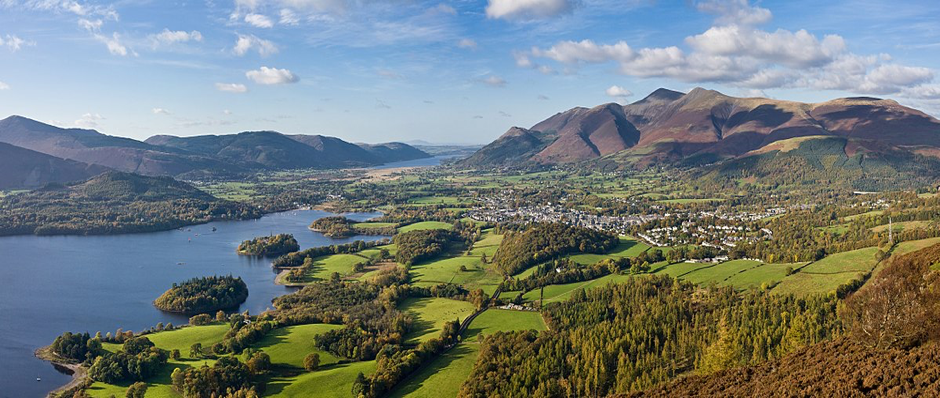
Cumbria is the UK’s 3rd largest county by area, yet 41st in terms of population. One might therefore think that there could be a lack of potential custom, however, the smaller number of full time residents is vastly compensated for in large parts of the year by tourism & seasonal workers in the National Park, and also a large number of contractors from outside the county working at sites such as Sellafield and BAE Systems in the industrial towns.
Outside of the National Park, the county is predominantly rural, and features a long stretch of coastline which can present interesting opportunities for business. There are several urban hubs with Carlisle being the largest, followed by Barrow-In-Furness, Kendal, Workington, Whitehaven and Penrith making up the top six. This means that there are a range of attractive options depending on what the focus of your proposed, or existing business is.
Tourism, hospitality and retail start-ups could be very well served by towns such as Kendal and Penrith, whereas manufacturing and engineering would likely be better aligned to post-industrial towns like Barrow-In-Furness and Workington, where people with those skills are more likely to be found. Professional services are scattered throughout the county, but with Carlisle being the focal point.
What is on offer?
Prospective businesses owners who would consider Cumbria as a location are exposed to a huge range of potential locations which could best service their venture, and there is also a great deal of help on offer. For example Cumbria Business Growth Hub offer a Business Start-Up Support Scheme (BSUS), which is a £1.4 million project that encourages enterprise and helps new businesses get off the ground, supporting them in their pre-start phase and challenging early years of trading. It’s open to anyone thinking of starting a business, or has a relatively new venture which is less than three years old.
Cumbria Chamber Enterprise Network has been launched to offer networking opportunities to new entrepreneurs and young businesses, offer free training and provide business grants to help a business idea get up and running or an established young business grow.
Cumbria Chamber of Commerce can also offer advice on various business issues and provides its members, with important updates on various topics such as policy, trade, Brexit, or updating on networking opportunities and events.
The huge network of support available in Cumbria via the Chamber of Commerce and Cumbria Business Growth Hub is invaluable for new businesses, and for those who have started their journey already. It should also be said that businesses owners are very supportive of each other and have become a very close knit community during the pandemic, sharing ideas and offering support to help each other get out of the other side, so there is an immediate sense of business community here in Cumbria.

So you should commit to Cumbria?
In short, the answer is yes. The vision is for Cumbria is to have one of the fastest growing economies in the UK, where SME’s can develop in a vibrant and healthy environment. Not only is Cumbria a beautiful place to live and work, the economy is complex and diverse, encompassing a myriad of sectors, offering opportunities for innovation and also the potential for joint ventures. There are very few businesses that could not find a suitable home somewhere throughout the county. The pandemic gave people a chance to re-evaluate their lives, and with workers in many industries now able to work flexibly, many people have flocked to the county, either to live, or to start a new venture. The area is therefore buzzing with activity and boasts a very strong community feel.
With that in mind, perhaps it is a good time for those who have the ambition to operate their own business and be their own boss, to come and take a look, and see what is waiting for you and your new business in 2022!

Main Photo by Tim Mossholder on Unsplash
