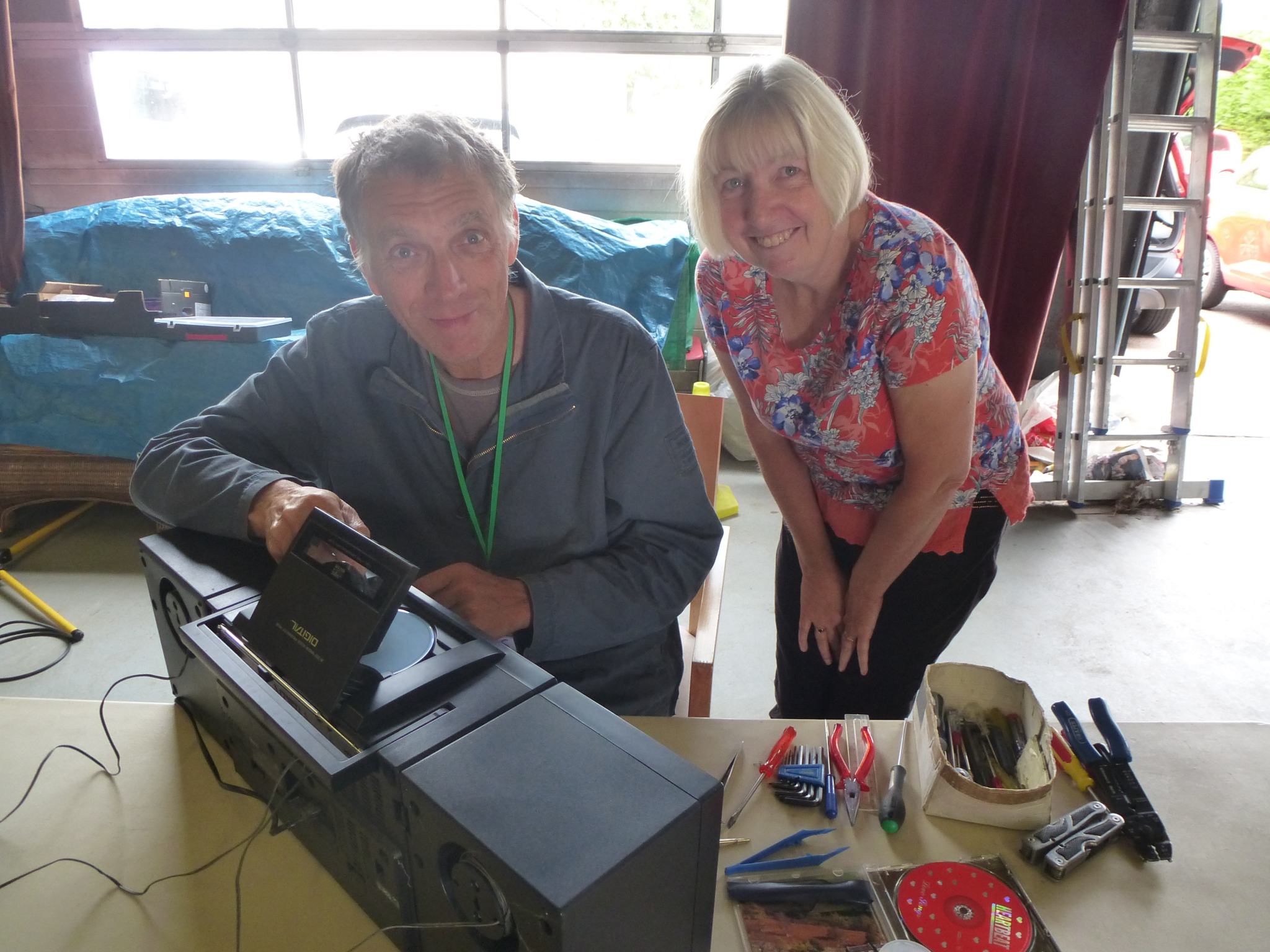

In our Tread Lightly blog this month, Jaki Bell shares ideas for reducing waste by repairing goods.
The goods we buy make up about five per cent of our carbon footprint. It mightn’t sound like a lot, but it’s one of the main chunks in the average person’s annual carbon emissions – almost the same as household electricity. So, if we want to tread more lightly on the planet, buying less stuff is a good idea. One of the ways to do that is to repair goods when they break, instead of buying new ones.
They say we’re a throwaway society. It can seem as though goods are designed to be thrown away after a year or two, but more things can be repaired than you might think and there are at least three great reasons for doing it:
1. It might save you money if it’s cheaper to repair than replace
2. Fewer new items need to be made, which is good for the environment – less CO2 emissions from producing and transporting goods.
3. The broken item won’t end up in landfill
Here are a few tips to help you bring that broken bike or toaster back into use!
Warranty:Check if the item is still under warranty or covered by your household or gadget insurance. Depending on the problem, you might be able to have it repaired free of charge.
Have a go:You can repair more things yourself than you might think! YouTube is awash with how-to videos on fixing common problems and there are helpful websites like https://www.ifixit.com/with step-by-step instructions. There are dedicated websites for some goods, like bicycles, or ask about bike maintenance classes at your local adult education centre.
Repair cafes:There are regular repair cafes dotted around Cumbria now. Bring in broken items and volunteers will try to help you fix them. There’s no charge but donations are generally welcome. (See below for details of a few coming up.)
Mobile phones:Ask at your local phone shop. Independent shops often refurbish and sell second-hand phones and may be able to repair yours at a reasonable cost. Some of the national chains also offer a repair service.
Computers:Local computer shops will often diagnose problems free of charge and can give you a quotation for the repair.
Household goods:There are firms that repair goods like washing machines and fridges in most towns. Google repair firms near you and check the small ads in your local newsletter or newspaper. Many electrical shops also offer a repair service.
Bicycles:Most cycle shops can help with repairs you don’t feel able to try. Look out for cycle repair workshops happening near you.
If you’ve given up on your broken item, before you bin it why not try listing it on Freegle? Someone out there might have the skills to repair it and use it themselves or they might welcome your item to use for parts. Go to ilovefreegle.org.
If all else has failed, take it to your local household waste recycling centre if it can be recycled.
And finally, if you do need to buy new goods, choose the best quality you can afford and ask how easily they can be repaired, so that they’ll last you for longer.
Repair Cafes coming up
- Shap Memorial Hall on Sun 6 Oct,
10am to1pm . - Penrith | Sat 12 Oct |
10am –1pm | Old Fire Station (Eden Arts), Bridge Lane - Keswick | 1st Sat of month |
10am to1pm , Riverside Bar (Cons Club), 14-15 Penrith Rd - Shap | Sun 6 Oct |
10am –1pm | Memorial Hall, Main Street
For more information about Repair Cafe click here.
Jaki Bell is the marketing manager at Cumbria Action for Sustainability, and a volunteer with Penrith Action for Community Transition and the Penrith and Eden Freegle group.
Read Jaki’s recent posts:
Click here to read more about Cumbria’s Climate Change Survey and get your link to complete on Business24