
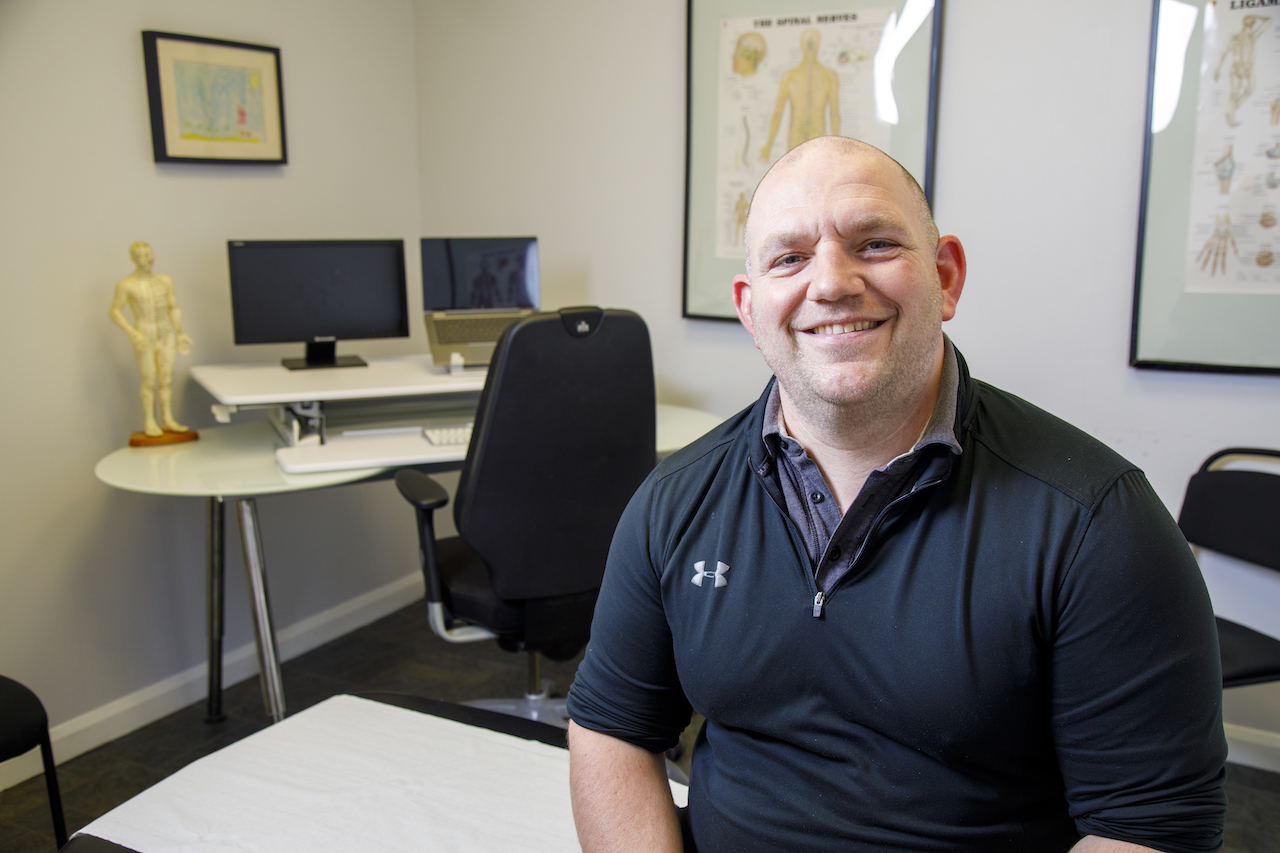
Employers are leaving themselves exposed and employees are putting themselves at risk if they don’t consider their office set-ups in a new era of hybrid working.
That’s the view of physiotherapist and occupational health specialist Nigel Douglas who is seeing increasing numbers of patients who are suffering physical injuries as a result of badly-planned working environments.
He’s finding that as people go back to the office after many months of working at home, as well as those who find themselves hot-desking, or who are still propping up their laptops on their sofa or dining room table, many aren’t getting the safety assessments that they need. That’s leading to back and neck problems which could lead to more serious workplace injuries.
Nigel, who owns the Proactive Physical Health practice in Workington, has been a physio since 2004, branching out into occupational health assessments, working for the likes of Nissan, Pirelli and Lloyds Bank. He arranges workplace ergonomic assessments designed to keep people healthy, or get them back to work after periods of sickness.
Nigel says: “It’s all about injury prevention and trying to be proactive. We need to look at all employees’ work stations – whether that’s at home, at a hot desk or properly back in the office. From their chair to their screens – the employer has a responsibility under HSE regulations to provide their staff with the right equipment.
“As an employee, look after yourself. Take two minutes to adjust your chair and desk – you need to take responsibility too.”
Nigel also focuses on supplying and setting up specialist ergonomic seating, desks and accessories to reduce the risk of injury. Proactive Physical Health has an online shop, but he is also an expert in sourcing bespoke products to suit unusual workspaces, like rooms in employee’s houses which suddenly became home offices.
And Nigel says there is more to consider than just the practicalities of the employee’s desk or working environment.
“The psychological and the physical are very closely linked,” he adds, “and there is a relationship between mental health and physical wellbeing. Are they stressed? Stress can increase the levels of cortisol and inflammation so they could suffer more pain.”
Nigel has three top tips for the ideal work station – whether that’s at home or in the office:
- The worst thing you can do is work off a laptop on the sofa or on a desk that’s too low – get a laptop stand at the correct height, and an external keyboard and mouse, or use a separate monitor. Your spine and neck will thank you.
- Avoid inappropriate chairs – it’s got to be the correct height for the desk or table and the backrest has to tilt, raise and lower as a minimum standard to get the correct posture.
- Sitting is more stressful on the spine than standing or walking, even with the right chair. Get up and walk around, at least once an hour. Taking more breaks can actually increase productivity.
