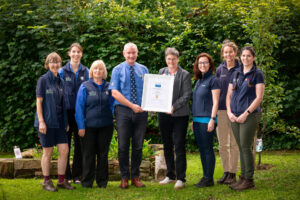
CUMBRIAN farmers are increasingly calling on a new service to help with essential tasks – the Vet Tech.
Vet Techs are trained to carry out jobs such as vaccinations, stress-free disbudding, blood testing, worm egg counts and mobility assessments.
The role is well established in New Zealand and is now growing in the UK.
Paragon Veterinary Group, which has centres at Dalston, Newbiggin and Wetheral, is among the first to have Vet Techs on their team.
Paragon Farm Vet Lead Philip Wilkinson says: “We decided to introduce Vet Techs because we saw a need for them from clients.
“It allows farmers to have someone come in and do a job at a more manageable cost, allowing vets to focus on the more specific veterinary services.
“By providing this service we take responsibility for ensuring these jobs get done and are done properly – for example our Vet Techs will ensure that a calf is given the correct amount of vaccine and that the vaccine is stored properly before it goes into the calves. It takes the worry and the problem off farmers’ shoulders.”
Richard Harrington runs 180 pedigree Holsteins at Birdshill Farm at Raughton, near Dalston. He has been using Paragon’s Vet Techs for two years.
“I use them to dehorn calves and we would never go back to the way we used to do it,” says Richard.
“The way the Vet Techs do the disbudding is stress-free for the animals, they don’t even know it’s being done.
“It comes at a cost, but you still have to value your own time if you were doing it yourself.
“The Vet Techs can do a batch of 15 or 18 calves in about three quarters of an hour. If I was doing it, it would take me all afternoon.”
The increased popularity of Vet Techs – who work under the supervision of veterinary surgeons – is partly being driven by new requirements from milk buyers, such as for animals to be disbudded at less than three weeks by a suitably trained person, and for ongoing herd lameness assessments by registered mobility scorers.
Karen McNeil and Emily Tinning are Vet Techs with Paragon, and both come from farming backgrounds.
They administer the intra-nasal vaccine for pneumonia.
Karen says: “We had a farmer who was getting quite a lot of pneumonia despite him periodically vaccinating. I said, we would visit, use and administer the same vaccine, but come regularly so we know that it’s been done at the right age and to all the calves, and see if we can make a difference.
“He thought it probably wouldn’t work. But now he’s saying pneumonia has really reduced and we’re doing a really good job. It’s good to be able to make a difference to them.”