CUMBRIA is of course best known for the Lake District National Park, with its stunning scenery, high mountains, and famous lakes, however, there’s much more to our county than this says Ryan Blackburn.
I love spending my time with the family exploring the west coast, the beaches are stunning, and the history of its coastal towns is fascinating. On a recent trip we visited Maryport and during harbourside walk discovered local fishermen selling fresh fish direct from their boats to customers on the quayside, which is incredibly exciting thing for a chef who loves cooking with fish to witness!
Maryport, itself is a small harbour town, steeped in history, with Roman origins. The fort and port originally known as Alvana, started life in about AD 122, shortly after the construction of Hadrian’s Wall started. After the Romans left the port gradually disappeared, to be replaced by a small fishing settlement, known as Ellenfoot, which took its name from the river Ellen that flows into the Solway Firth at that point.
Things changed in 1749, when local landowner Humphrey Senhouse from the nearby Netherhall Estate decided to build a new harbour and town, which he later decided to call Maryport after his wife Mary. This new town boomed and by the 19th century, it was home to iron and brass foundries, glass works, paper mills, mining, and several shipping lines, including the world-famous White Star Line owners of the Titanic. Sadly, when new docks were built in Workington in 1927 Maryport started a steady decline.
There’s been a revival in recent years thanks to regeneration projects that have created a yachting marina and a fishing cooperative. The cooperative has revitalised the local fishing fleet and put it at the forefront of Cumbria’s fishing industry, harking back to its heyday when the port was known for its Solway brown shrimps, coddling, bass, mackerel, wild salmon and herring in the summer months.
When I wandered along the quayside the boats had just landed freshly caught skate, dover sole and langoustine, the freshest fish and seafood you can imagine, with the added bonus that it can all be bought at prices that make the journey to the coast more than worthwhile.
Unfortunately, like many other fishing ports in the UK the vast majority of the catch that’s landed ends up being exported to the continent so get yourself along and buy fresh locally sourced fish, you won’t be disappointed. Not only that you can enjoy a walk around the harbour, and along the seawall to the pier, which is only recommended to people with a good head for heights!
The best thing to do is follow them on Facebook where the Chelaris Fresh Fish or Silver Fern Fresh Fish pages on Facebook, which provide daily updates of what’s being landed and how to pre-order anything that catches your eye, the pages also allow you to find out what time the boats will return to harbour, as this alters with tide times.
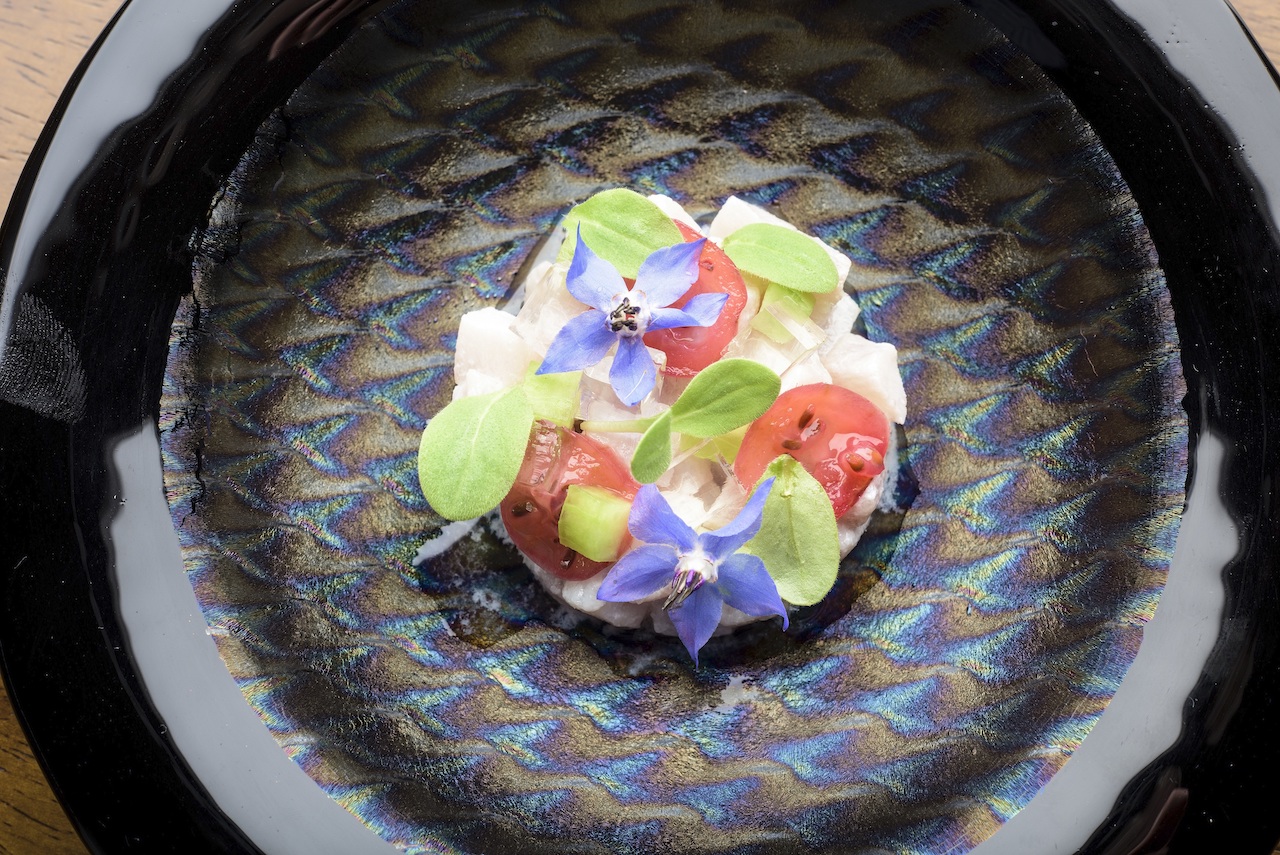
For this recipe I have decided to take advantage of the freshness of the fish and use it uncooked and quickly cured using a ceviche recipe I learned during my time working for Martin Wishart in Edinburgh, which I’ve garnished with gooseberries, cucumber, and borage (if you can’t get borage, use coriander).
You can use any fresh fish for this dish. I find it’s best to go to your local fishmonger if you can’t buy direct from the harbourside. In Cumbria we have some really exceptional fishmongers, who are really worth searching out. I recommend Fyne Fish in Cockermouth, as I know both of this fishmonger has great direct access to fishermen on Cumbria’s west coast, buying their fish direct from the boat.
Recipe: Ceviche of Mackerel
Serves 6 as a starter
- 500g mackerel fillets
- 15g white wine vinegar
- 30g caster sugar
- 45ml lemon juice
- 5g salt
- Maldon sea salt
- Lime
- Tequila
- Cucumber
- Borage flowers
- Borage leaf
- Pickled gooseberry
- 100g gooseberry
- 100ml white wine vinegar
- 50g caster sugar
- 50ml water
- Gooseberry puree (optional)
- 500g gooseberries
- 100g caster sugar
- 1/2 lemon juice
- 20g butter
Method
Place 15g of caster sugar and 15ml vinegar in a small pan and bring to the boil and set aside to cool.
To make the gooseberry puree, top and tail the gooseberries and place in a bowl with the sugar, butter, and lemon juice, wrap the top with cling film and place the bowl on top of a gently simmering pan of water. Cook gently until the gooseberries are soft then place in a blender to puree then pass through a fine sieve and set aside until required.
To pickle the gooseberries, place the sugar vinegar and water in a pan and bring to the boil. Add the gooseberries and take of the heat set aside to cool.
De-skin the mackerel and dice you need 420g when prepped. Put in a metal bowl and place in the fridge.
Peel the cucumber then cut it in half. Remove the seed and dice into 2cm cubes.
In a bowl pour the sugar and vinegar syrup that was set aside to cool into a metal bowl add the remaining sugar, salt, and lemon juice mix with a whisk until the sugar and salt is dissolved.
Remove the fish from the fridge and season with the rock salt, add enough of the dressing to coat the fish and season with lime juice and tequila to taste. Once this is done you need to work quickly to get the fish served or it will over cure.
To serve spoon a little of the puree on the bottom of the bowl. Place the fish on top, garnish with the pickled gooseberries, cucumber and borage as shown in the picture.
- Find out more and book a table online at The Old Stamp House & Kysty, Ambleside